NIMA MOSLEMY

PhD researcher in metal additive manufacturing at Heriot-Watt University, Edinburgh. I design, print, scan and crush lattice structures to find out how they really behave.

Everything starts with one cell.

This is the body-centred cubic (BCC) unit cell: eight struts meeting at a single node.

Repeat it in three directions and you get a metal part that is mostly empty space but still carries load. My PhD asks how far the printed lattice drifts from the designed one, and what that costs in stiffness and strength.

Process
Laser powder bed fusion (LPBF)
Structure
BCC strut lattices
Methods
Analytical models, FEA, XCT, mechanical testing
Funding
EPSRC doctoral programme

Printed from powder, 30 microns at a time.

In LPBF, a laser melts a thin layer of metal powder, the bed drops, and the next layer goes on top. Keep scrolling to run the build.

Laser power, scan speed and hatch spacing decide what each strut really looks like. Small changes in the process show up later as big changes in the part.

What comes out is never the CAD.

X-ray computed tomography (XCT) shows the real struts: wavy, thicker or thinner than designed, rough on the surface and porous inside.

I measure these deviations strut by strut and put them back into the simulation, so the model describes the part that was printed and not the one that was drawn.

Then it gets crushed.

Compression tests and finite element analysis show where a BCC lattice gives way first: in bending, right next to the nodes.

Analytical models turn that into a prediction of stiffness. The long-term goal is a dataset that links manufacturing parameters to mechanical performance, ready for machine learning.

Drag to rotate

Build your own lattice.

Choose a unit cell, set its size, load it, then download it for printing.

Relative density
–
Mass
–
Stiffness E*
–
Overall size
–

Density and stiffness are first-order estimates (Gibson–Ashby scaling, node overlap ignored). The stress colours are illustrative, not FEA. STL bodies overlap at the nodes, so union them before slicing.

Software I build.

Open-source tools, from AI for additive manufacturing to native Windows apps.

FERDOWSI v2 AI writing and voice assistant for Windows 10 and 11

FERDOWSI opens right above your cursor in any Windows app and fixes, rewrites, dictates or reads text in under a second. It is built in three layers: a C++20 Win32 hook, a C# WPF overlay and a Python AI engine.

  • C++20
  • C# / WPF
  • Python 3
  • Gemini API
  • DeepSeek API
  • Groq Whisper
  • Deepgram Aura
  • MIT licence
  • English, Persian and Finglish fixGrammar, spelling, half-space correction and Finglish-to-Persian conversion in real time.
  • Voice dictationSpeech to text in English, Persian or mixed mode. It removes filler words and never answers back like a chatbot.
  • Read aloudNeural text to speech through Gemini Audio, Deepgram Aura, Voice AI and SAPI.
  • Reword and dictionarySix tones, twelve formatters, custom instructions, synonyms, antonyms and a Persian dictionary.
LPBF Defect Detection

Machine learning and computer vision pipelines that find anomalies and defects in metal parts made by laser powder bed fusion.

  • Python
  • Deep learning
  • Computer vision
  • Quality assurance

ModernTimer for Windows

A tiny portable timer and stopwatch written in C++ with Direct2D rendering. One small executable with ring, compact, bar and full-screen modes.

  • C++
  • Direct2D
  • Win32 API
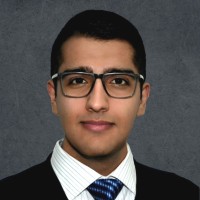
Portrait of Nima Moslemy

About me.

I am Nima Moslemy, a PhD researcher in mechanical engineering at Heriot-Watt University in Edinburgh, on an EPSRC-funded programme.

My work joins metal 3D printing with simulation and software: laser powder bed fusion, architected lattice structures, finite element analysis, and machine learning for defect detection.

Before the PhD I studied biomechanical engineering at Amirkabir University of Technology and led a hospital manufacturing team that made more than 600 patient-specific prostheses.

Experience

  1. Postgraduate ResearcherHeriot-Watt University, EdinburghEPSRC doctoral research in LPBF, lattice structures and AI defect detection. Teaching assistant for Design and Manufacture.
  2. Research AssistantBio Fabrication Lab, Amirkabir University of TechnologyResearch on edible scaffolds and 3D bioprinting. Teaching assistant for Strength of Materials II and 3D Printing.
  3. Head of Manufacturing DepartmentCMFRC, Shariati Hospital, TehranDesigned and made 600+ patient-specific prostheses with SLM, PolyJet, DLP and FDM, and ran the clinical AM workflow.

Education

  1. PhD in Mechanical EngineeringHeriot-Watt University, EdinburghSupervisors: Dr F. Shalchy, Dr A. Ozel, Dr M. Ikhlaq
  2. MSc in Biomechanical EngineeringAmirkabir University of Technology (Tehran Polytechnic)Thesis: edible scaffolding for cultured meat by 3D bioprinting.
  3. BSc in Biomechanical EngineeringAmirkabir University of Technology (Tehran Polytechnic)Project: design and manufacture of an RTV-2 silicone 3D printer.

Skills

Manufacturing and testingLPBF / SLM, PolyJet, DLP, FDM. Mechanical and surface characterisation. Bioprinting, biomaterials and cell culture.
Simulation and codeAbaqus FEA, nTopology, SolidWorks, Materialise Mimics and Magics. Python, C++20, C#, MATLAB, machine learning.

Publications.

  1. Role of artificial intelligence in data-centric additive manufacturing processes for biomedical applications

    Mohammadnabi, S., Moslemy, N., Taghvaei, H., Zia, A.W., Askarinejad, S., Shalchy, F. Journal of the Mechanical Behavior of Biomedical Materials, 166, June 2025.

  2. Development of an edible scaffold utilizing isolated soy protein for sustainable cultured meat production through 3D bioprinting

    Moslemy, N., Taffazoli, M., Abolfathi, N. Under review.

  3. Review in edible materials for sustainable cultured meat: scaffolds and microcarriers production

    Moslemy, N., Sharifi, E., Asadi-Eydivand, M., Abolfathi, N. International Journal of Food Science and Technology.

Get in touch.

For research collaboration, lattice design questions or software, use the contact form or reach out on LinkedIn.

Location
Heriot-Watt University, Edinburgh, UK
Profiles
LinkedIn, GitHub, Google Scholar, ResearchGate